

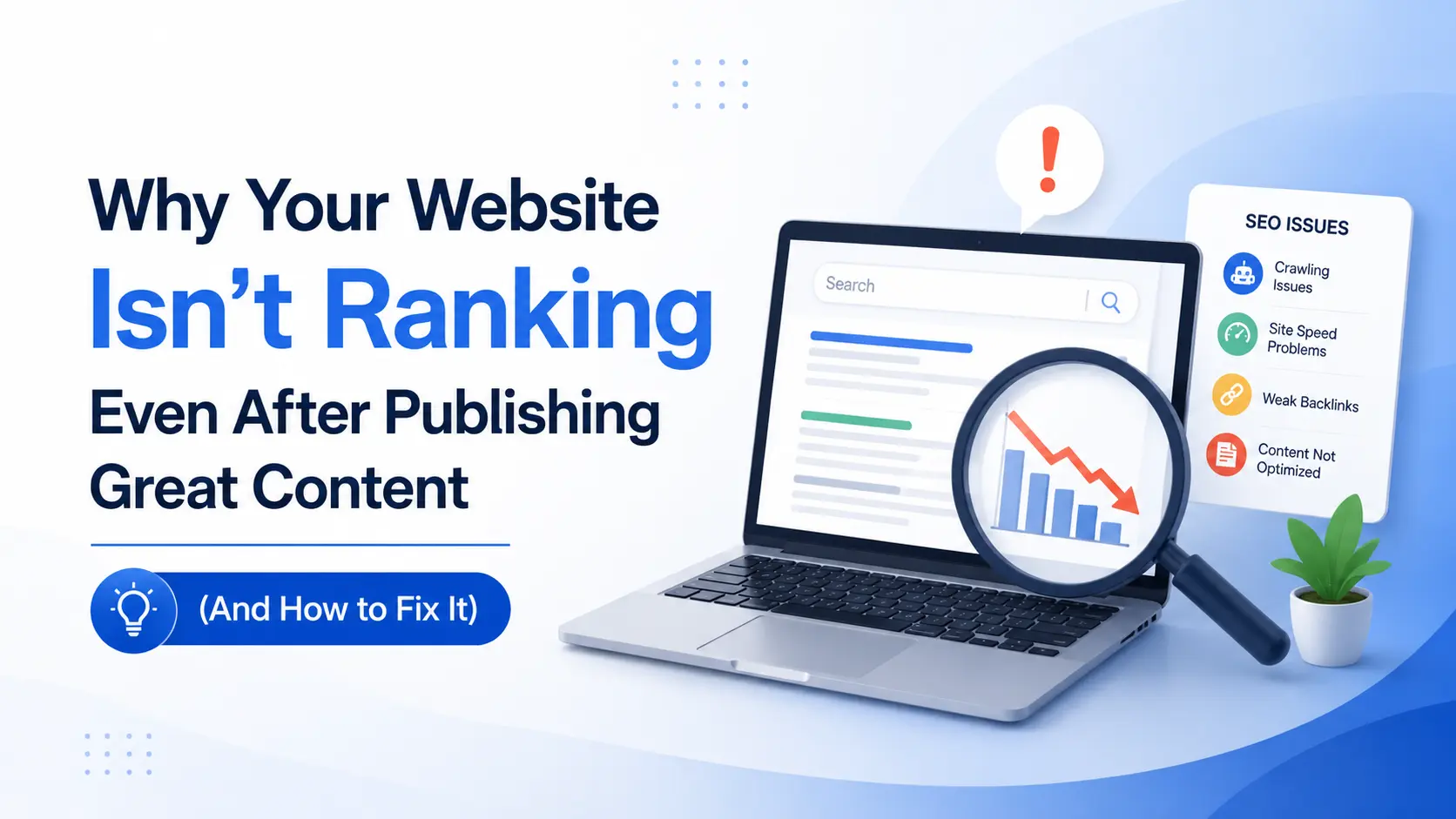
Publishing great content is only one part of SEO. If your website isn’t ranking on Google, the issue could be poor on-page SEO, weak search intent optimisation, missing internal links, slow page speed, or a lack of topical authority. Combining quality content with professional on-page SEO Services helps search engines understand, trust, and rank your pages more effectively.
Introduction
You’ve spent hours researching your topic, writing an informative article, and publishing it on your website. The content is well-written, visually appealing, and genuinely helpful to readers.
Yet weeks or even months later, your page is still buried deep in Google search results.
If this sounds familiar, you’re not alone.
Many businesses believe that publishing quality content is enough to achieve higher rankings. While great content is essential, it’s only one piece of a much larger SEO puzzle. Google evaluates hundreds of ranking signals before deciding where your page should appear in search results.
Factors such as search intent, page structure, user experience, internal linking, website speed, and technical optimisation all influence your rankings.
This is why businesses often invest in On-Page SEO Services to ensure every page is optimised not only for users but also for search engines.
At SRS Pro, we regularly see well-written pages underperform because important elements such as search intent, internal links, metadata, page structure, and user experience have not been optimised together.
Let’s explore why your website may not be ranking despite having excellent content and what you can do to improve your visibility.
Great Content Alone Doesn’t Guarantee Rankings
Creating valuable content is important, but Google doesn’t rank pages based on writing quality alone.
Its algorithms evaluate whether a page provides the best overall experience for users.
Some of the factors Google considers include:
- Does the content match search intent?
- Is the page easy to read and navigate?
- Does the website demonstrate expertise and trust?
- Is the page technically optimized?
- Does the website load quickly on mobile devices?
- Is the content connected to related topics through internal links?
If any of these areas are weak, your rankings can suffer—even if your content is excellent.
8 Reasons Your Website Still Isn’t Ranking
1. Your Content Doesn’t Match Search Intent
One of the biggest SEO mistakes is writing content that doesn’t answer what users are actually searching for.
For example, if someone searches:
“How to improve website speed”
They expect practical optimization tips, not a sales page about website development services.
Before creating content, identify whether the search intent is:
- Informational
- Commercial
- Transactional
- Navigational
Content that satisfies user intent is far more likely to rank.
2. Your Title Tag and Meta Description Need Improvement
Your title tag is one of the first things both Google and users see.
A weak or generic title can reduce click-through rates, even if your page ranks well.
Your title should:
- Include your primary keyword naturally
- Clearly describe the content
- Encourage users to click
Similarly, a compelling meta description can improve visibility and attract more qualified traffic.
3. Weak Internal Linking
Many businesses publish blog posts without connecting them to related pages.
Internal links help:
- Guide users to relevant information
- Improve website navigation
- Distribute page authority
- Help Google understand your website structure
For example, an article about website rankings can naturally link to related topics such as technical SEO, website optimisation, or content marketing.
A strong internal linking strategy is a key component of effective On Page SEO Services.
4. Poor Heading Structure
A page should have a logical structure that makes it easy for both readers and search engines to understand.
Use:
- One H1 heading
- Clear H2 sections
- Supporting H3 headings
Well-structured content improves readability and helps Google identify the main topics covered on the page.
5. Images Aren’t Optimised
Images improve user experience, but unoptimized images can slow down your website and reduce SEO performance.
Always:
- Compress large image files
- Use descriptive filenames
- Add relevant alt text
- Choose appropriate image formats
Image optimisation is a simple but often overlooked ranking factor.
6. Slow Website Performance
Page speed directly impacts both rankings and user experience.
If visitors have to wait several seconds for your website to load, many will leave before viewing your content.
Improving page speed through image compression, browser caching, code optimisation, and reliable hosting helps both users and search engines.
7. Weak EEAT Signals
Google wants to recommend trustworthy websites.
This is why Experience, Expertise, Authoritativeness, and Trustworthiness (EEAT) play an increasingly important role in SEO.
Strengthen your EEAT by:
- Publishing original insights
- Sharing practical experience
- Updating outdated content
- Displaying author information
- Including customer testimonials or case studies where relevant
Google rewards content that demonstrates genuine expertise rather than simply repeating information available elsewhere.
8. You Haven’t Built Topical Authority
One article rarely establishes authority.
Instead, Google prefers websites that cover a subject comprehensively.
For example, if your website offers SEO services, supporting content might include:
- Technical SEO
- Keyword research
- Internal linking
- Website audits
- Content optimization
- Local SEO
This interconnected content helps search engines recognise your expertise.
Simple On Page SEO Fixes You Can Apply Today
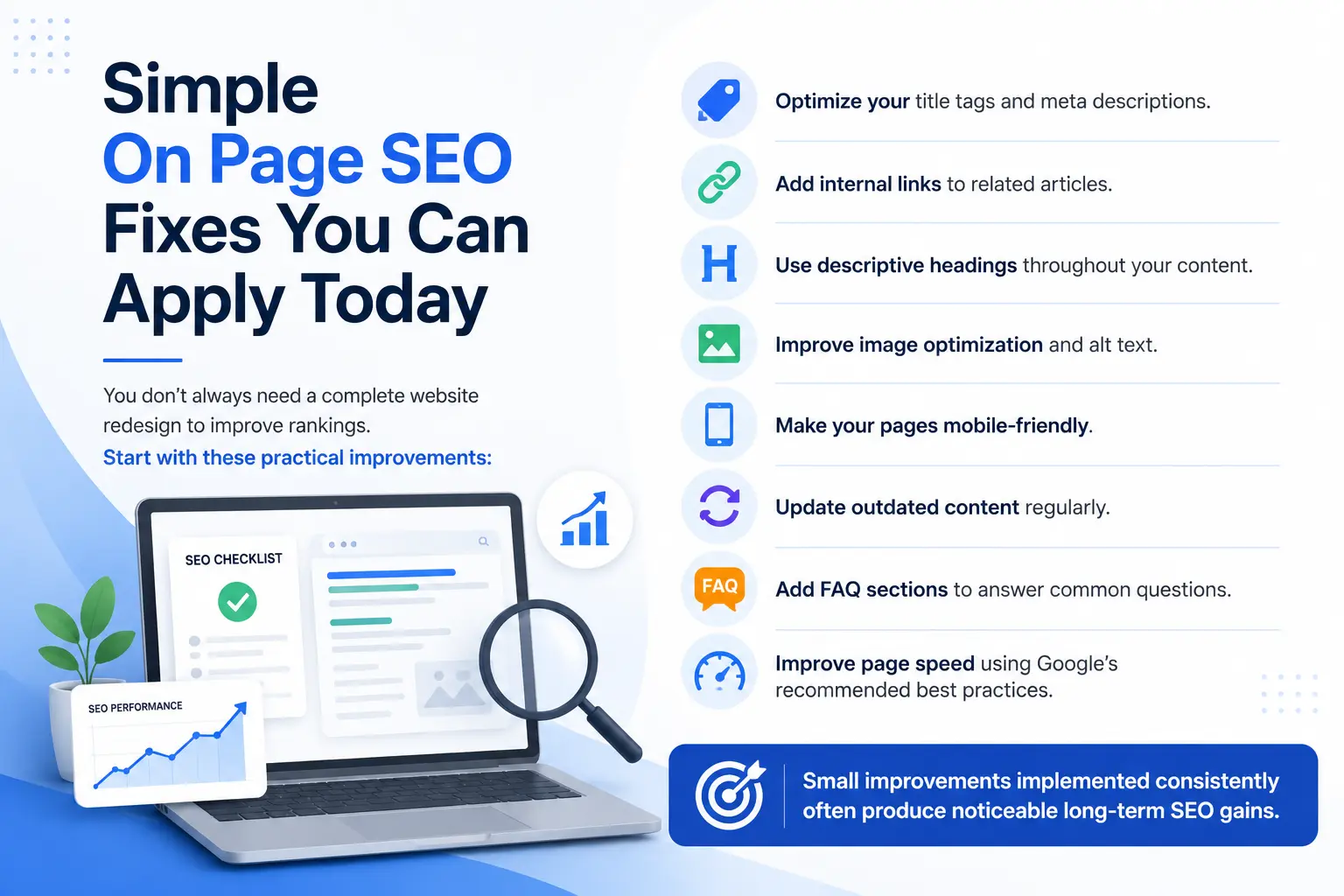
You don’t always need a complete website redesign to improve rankings.
Start with these practical improvements:
- Optimize your title tags and meta descriptions.
- Add internal links to related articles.
- Use descriptive headings throughout your content.
- Improve image optimization and alt text.
- Make your pages mobile-friendly.
- Update outdated content regularly.
- Add FAQ sections to answer common questions.
- Improve page speed using Google’s recommended best practices.
Small improvements implemented consistently often produce noticeable long-term SEO gains.
How SRS Pro Helps Improve On-Page SEO Performance
At SRS Pro, we help businesses identify the on-page issues that prevent valuable content from reaching its full ranking potential. Our approach combines content optimisation, technical checks, search-intent analysis, internal linking, metadata improvements, image SEO, and page-experience recommendations.
Rather than applying the same checklist to every website, SRS Pro reviews the structure, audience, competition, and goals of each page before recommending improvements. This helps businesses create content that is easier for users to understand and easier for search engines to crawl, interpret, and rank.
For businesses in Ahmedabad, Gujarat, and across India, SRS Pro’s On Page SEO Services are designed to strengthen search visibility, improve content relevance, and support sustainable organic growth without relying on keyword stuffing or short-term tactics.
Conclusion
Publishing high-quality content is essential, but it isn’t enough on its own to achieve strong Google rankings.
Search engines evaluate every aspect of your webpage, from search intent and internal linking to technical performance and user experience.
By combining valuable content with structured optimisation, SRS Pro helps businesses improve search visibility, attract more relevant traffic, and build a stronger foundation for sustainable organic growth.
Instead of asking, “Why isn’t my content ranking?”, start evaluating whether your pages are fully optimised for both users and search engines. Small improvements today can lead to significant ranking gains over time.
Frequently Asked Questions
What is On Page SEO?
On Page SEO involves optimising individual web pages through better content, headings, metadata, internal links, images, and technical improvements to improve search engine rankings and user experience.
Is good content enough for SEO?
No. Great content is important, but factors like search intent, page speed, internal linking, technical SEO, and website authority also influence rankings.
Why isn’t my website ranking on Google?
Common reasons include poor keyword targeting, weak on-page SEO, technical issues, slow website speed, lack of backlinks, and content that doesn’t satisfy user intent.
How often should I update my website content?
Review important pages every few months to ensure information remains accurate, relevant, and aligned with current SEO best practices.
What do On Page SEO Services include?
Professional On Page SEO Services typically include keyword optimisation, title tag improvements, meta descriptions, heading structure, internal linking, image optimisation, content enhancements, and technical recommendations to improve overall search visibility.